Bridging Across the Ocean — A Journey of Exchange in Singapore
2026.05.05
ActivityA Journey of Exchange in Singapore
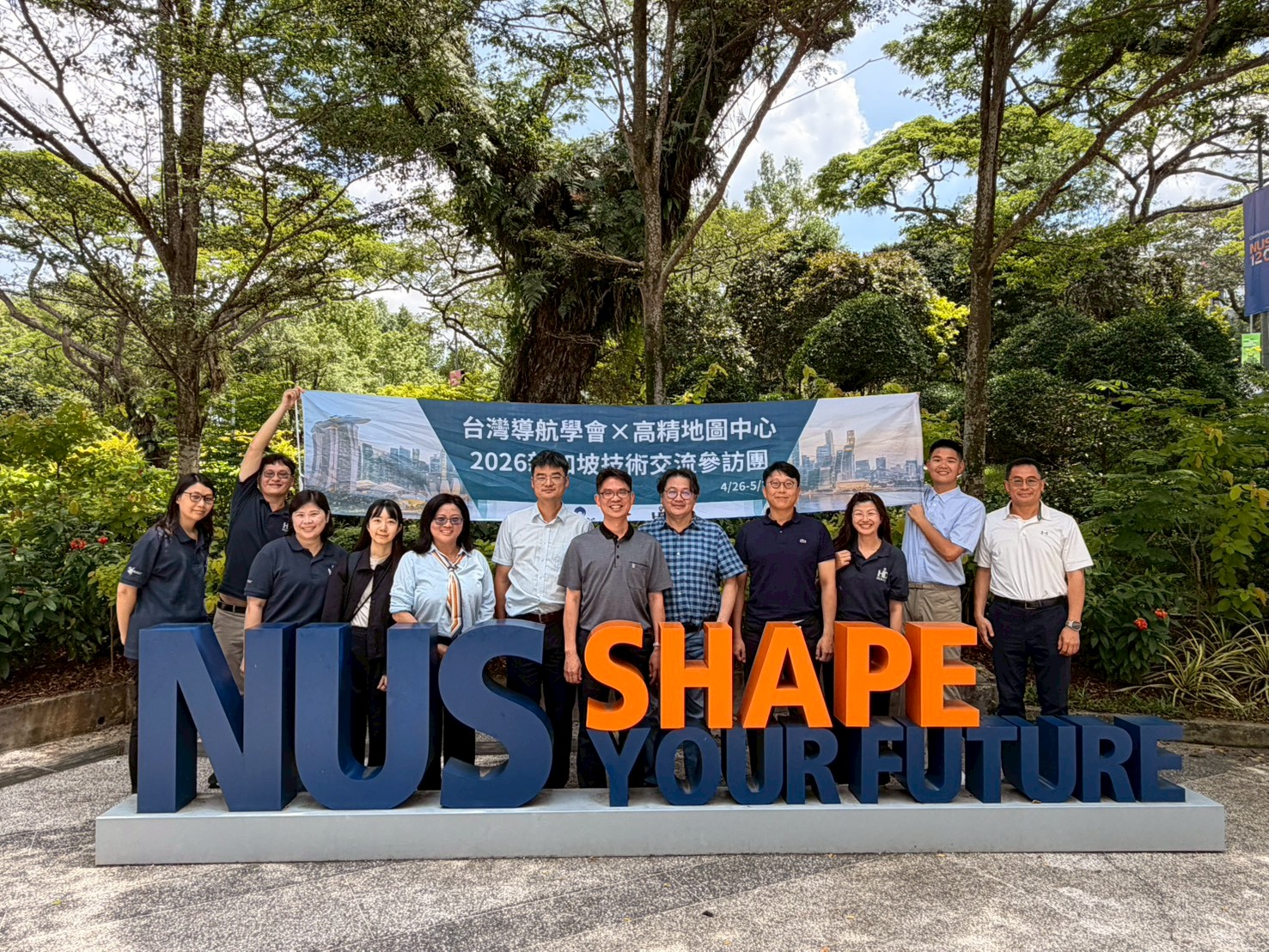
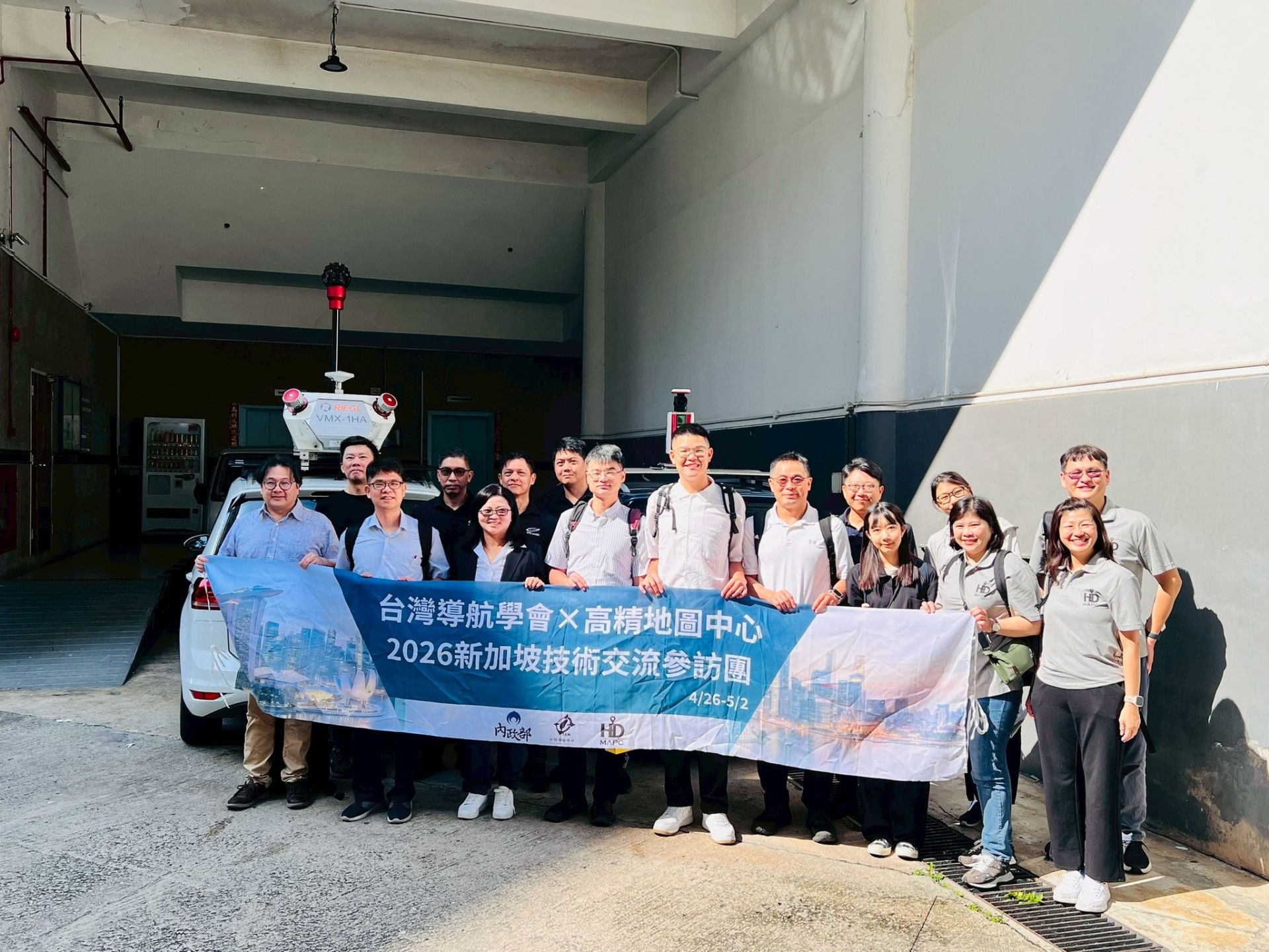
At the end of April, a professional delegation led by the Taiwan Institute of Navigation embarked on a meaningful visit to Singapore. The group was headed by Professor Kai-Wei Chiang, President of the Institute and Director of the High-Definition Map Center, accompanied by officials from the Department of Land Administration of the Ministry of the Interior, professors from surveying-related departments, and representatives from Taiwan’s surveying and mapping industry.
This was not merely a visit to observe how others operate—it was a journey to engage with the world, seek common ground, and explore opportunities for future collaboration.
--
From Handshakes to Signatures: The Beginning of Cooperation
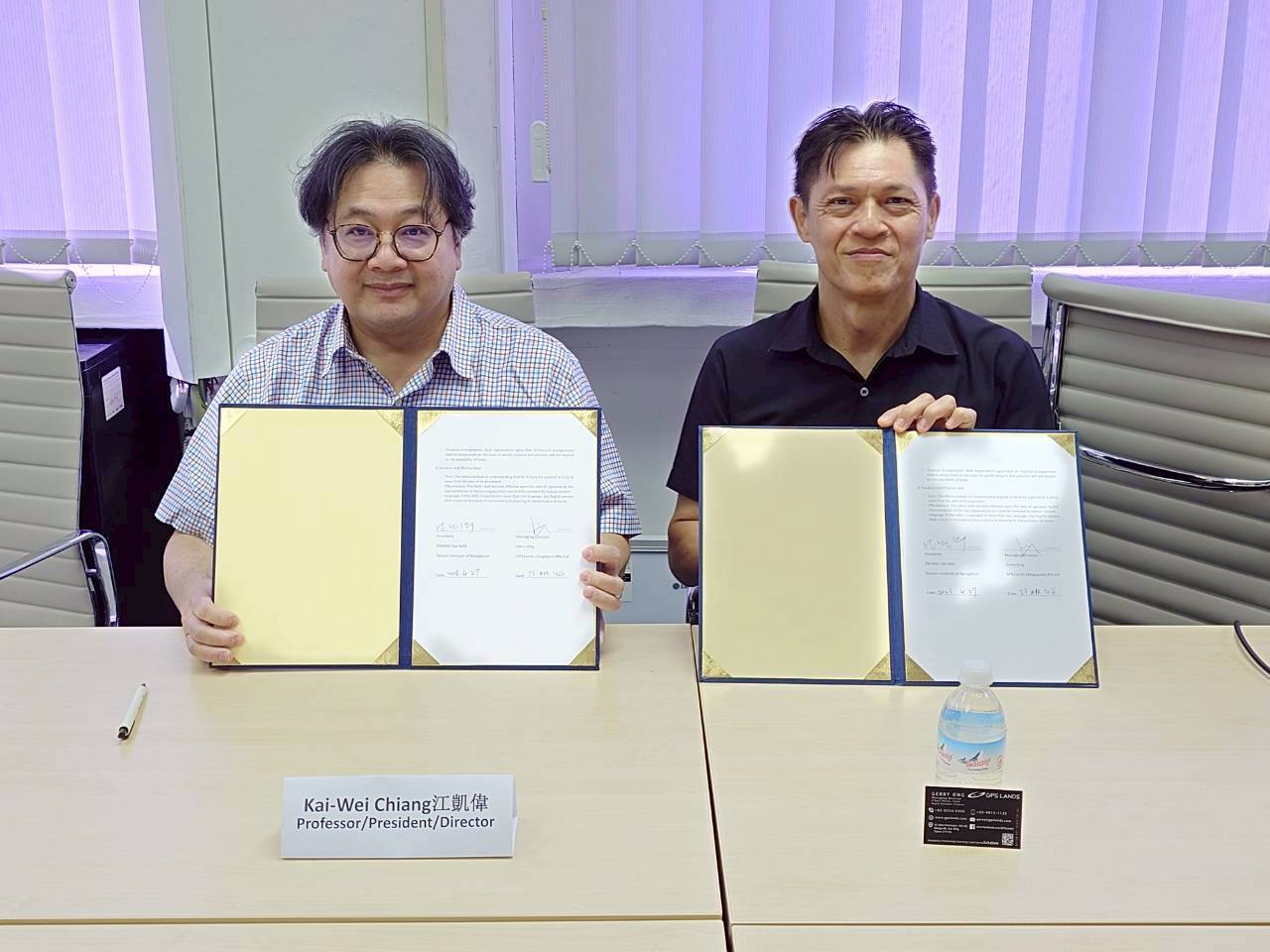
The first stop of the trip marked an important milestone, as the Taiwan Institute of Navigation formally signed a Memorandum of Understanding (MOU) with Singapore-based positioning solutions provider GPS Lands.
This agreement symbolizes mutual trust between both parties and opens the door for deeper collaboration in positioning and geospatial technologies. More than signatures on paper, it reflects a shared commitment to advancing technology together and represents Taiwan’s concrete step onto the international stage.
--
Experiencing the Weight of the Future at the Frontline of Technology
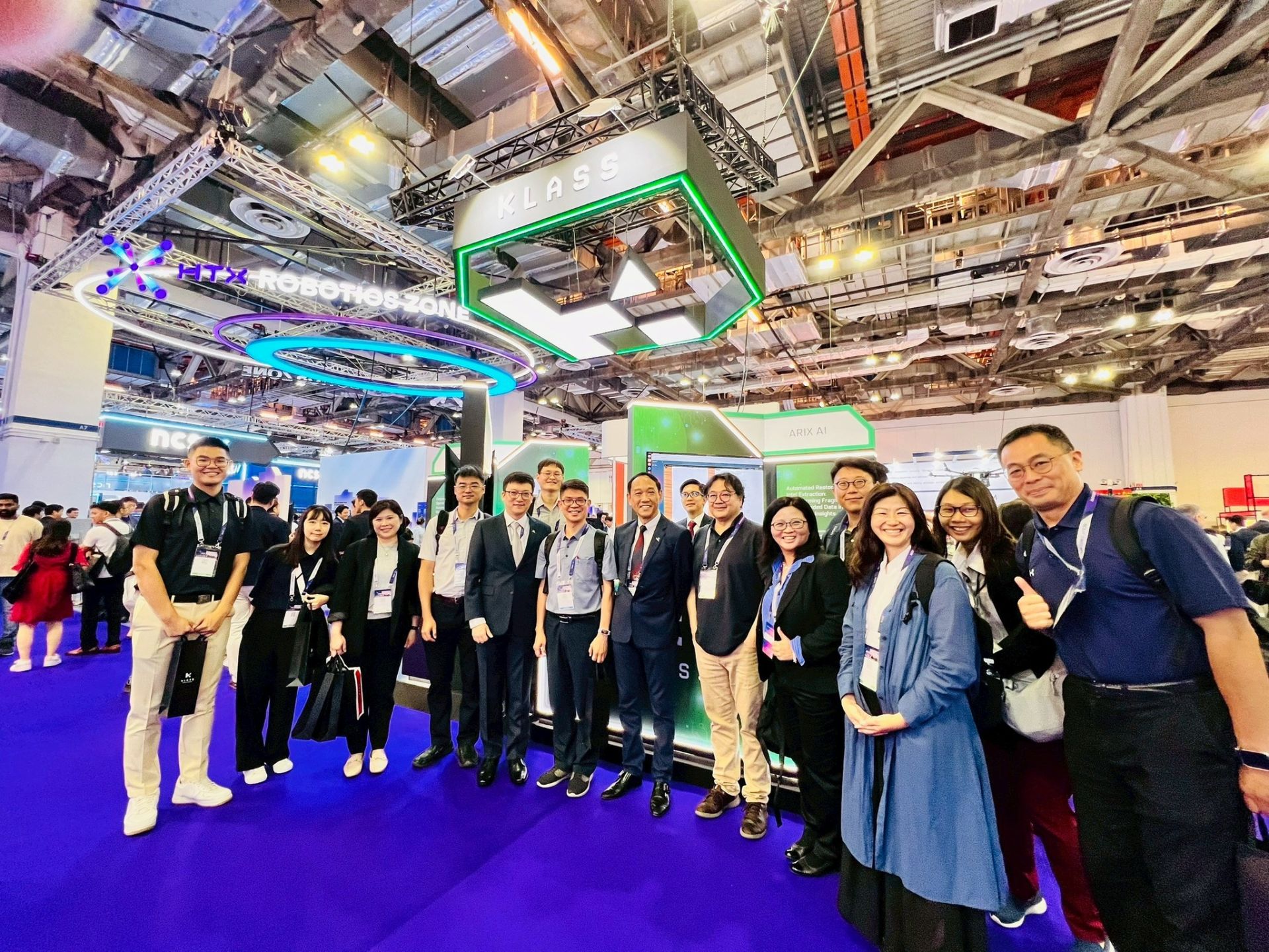
At the Milipol TechX Summit 2026, the delegation was immersed in the forefront of international public safety technology.
Held under the theme “Supercharging Innovation for our Safer Tomorrow,” the summit is one of the largest public safety technology events in the Asia-Pacific region. Jointly organized by HTX Singapore, France’s Civipol, and Comexposium, and supported by the Ministries of Home Affairs of both Singapore and France, the event brought together more than 20,000 visitors from 89 countries and 270 leading exhibitors. Featured sectors included AI autonomous systems, cybersecurity, unmanned vehicles, and emergency response technologies.
As part of the global Milipol Network—alongside flagship events in Paris, Qatar, India, and Brazil—Milipol TechX serves as a key node for security technology exchange in the Asia-Pacific region.
The summit also featured keynote speeches by internationally renowned figures such as Arthur Mensch, Co-founder of Mistral AI, and Jeff Moss, Founder of DEF CON, who shared insights on sovereign AI, cyber threats, and the future of law enforcement technologies.
During the exhibition, the delegation also had valuable exchanges with two representative Singaporean innovation teams:
-
HTX RAUS Centre of Expertise (Robotics, Automation and Unmanned Systems), which demonstrated the future of smart enforcement and urban management through highly integrated autonomous systems.
-
Klass Engineering & Solutions, a local precision engineering company that shared practical experience on overcoming technical challenges through innovation under limited resources.
These interactions reinforced one key message: technological breakthroughs are rarely achieved in isolation—they are built through openness, dialogue, and continuous collaboration.
--
Seeing the Depth of Governance Through Maps
The delegation visited the GIS Center of the Department of Geography at the National University of Singapore (NUS Geography), where discussions focused on cutting-edge applications of spatial data.
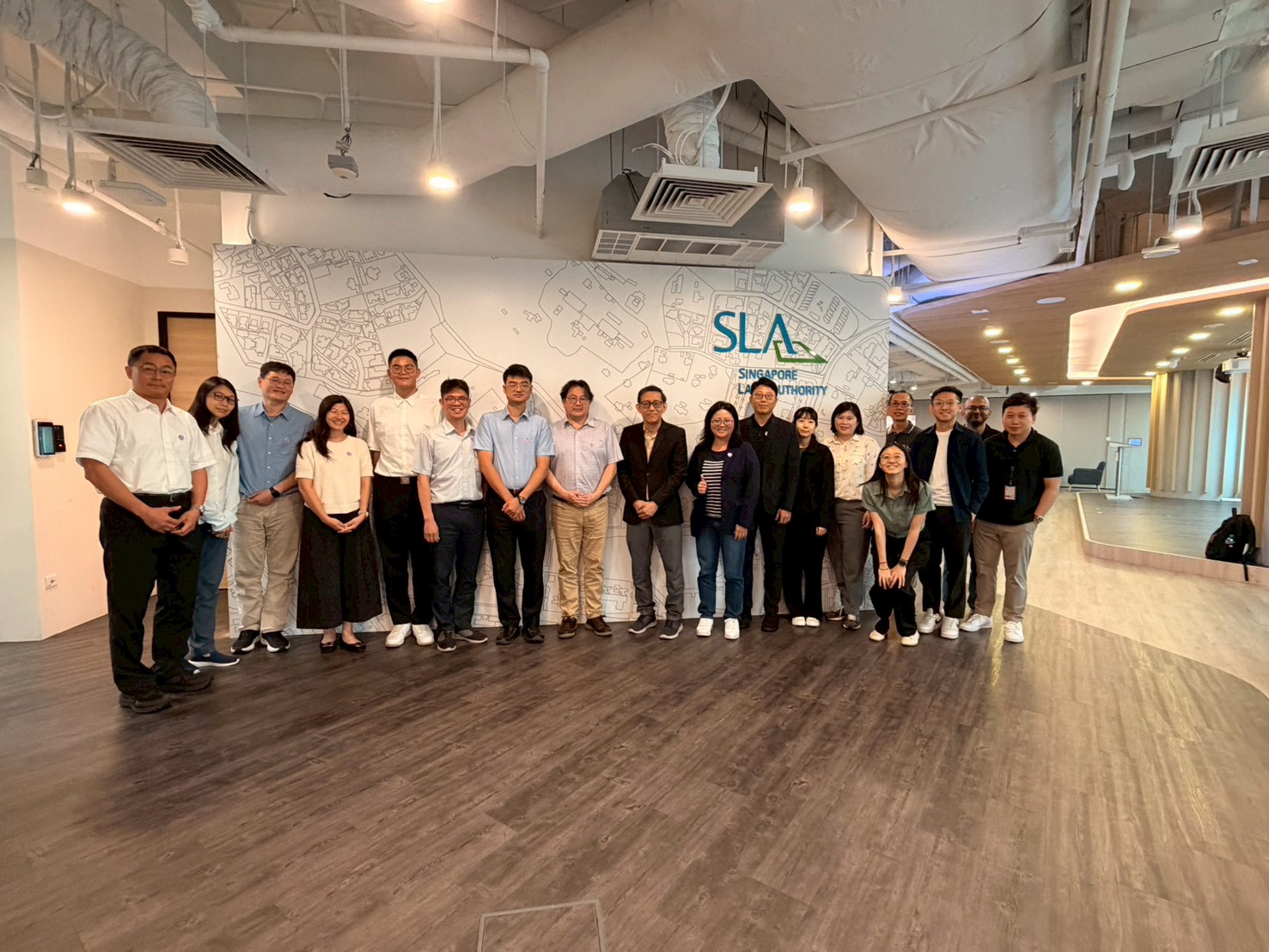
They also visited the Singapore Land Authority (SLA) to learn firsthand how this city-state uses highly precise land information systems to support efficient land governance.
Finally, through professional exchange with the Singapore Institute of Surveyors and Valuers (SISV), the delegation gained deeper appreciation of the important bridging role the surveying profession plays between policy and the market.
Singapore demonstrates through practice that geospatial information is not merely a technical tool—it is a cornerstone of national competitiveness.
--
What We Brought Back to Taiwan Was More Than Business Cards
Over the course of seven intensive days, the Taiwan Institute of Navigation led the delegation through engagements spanning industry, academia, and government. Every dialogue expanded horizons and inspired new perspectives.
What the team brought back was not only connections, but also broader visions for the future development of Taiwan’s geospatial and surveying industries, along with strong expectations for future international cooperation.
This journey was a beginning—not an end.
We sincerely thank all host organizations for their warm hospitality, generous sharing, and meaningful exchanges, as well as all delegation members, government officials, and professors for their dedication and contribution.
We look forward to seeing these newly formed connections bear even greater fruit in the future.